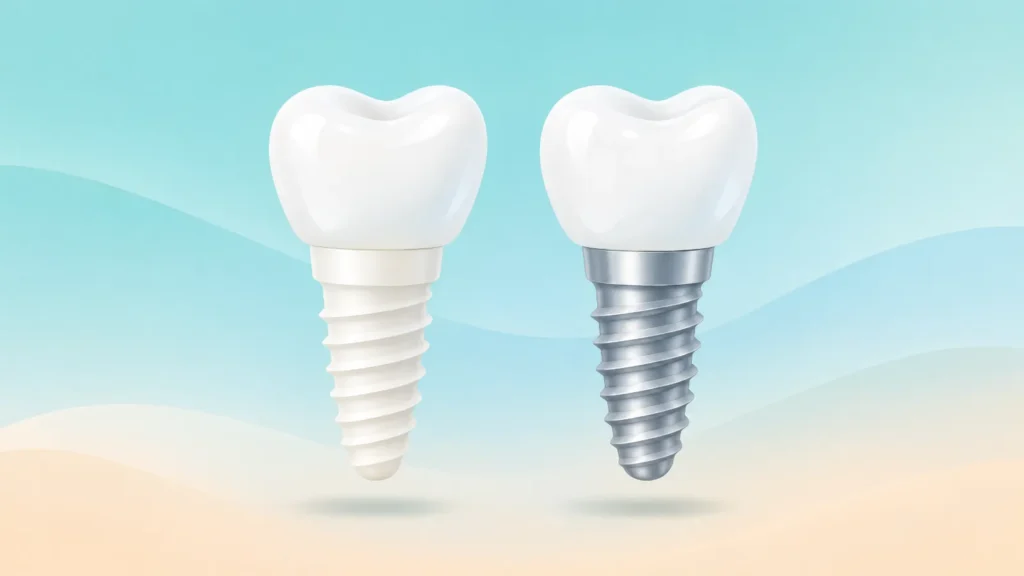
Zirconia and titanium implants differ mainly in what the post in your jawbone is made of. The surgery, the healing and the daily care are largely the same. The FDA says most implant systems are titanium or zirconium oxide and calls the safety profiles of both well known. Neither the FDA nor the dental associations cited here rank one above the other.
That leaves the choice to your exam, your health history and the system your dentist or oral surgeon uses. Below is what the FDA and the professional associations actually say, where the evidence runs thin, and which questions help you compare two plans.
What do titanium, zirconia and the other implant terms mean?
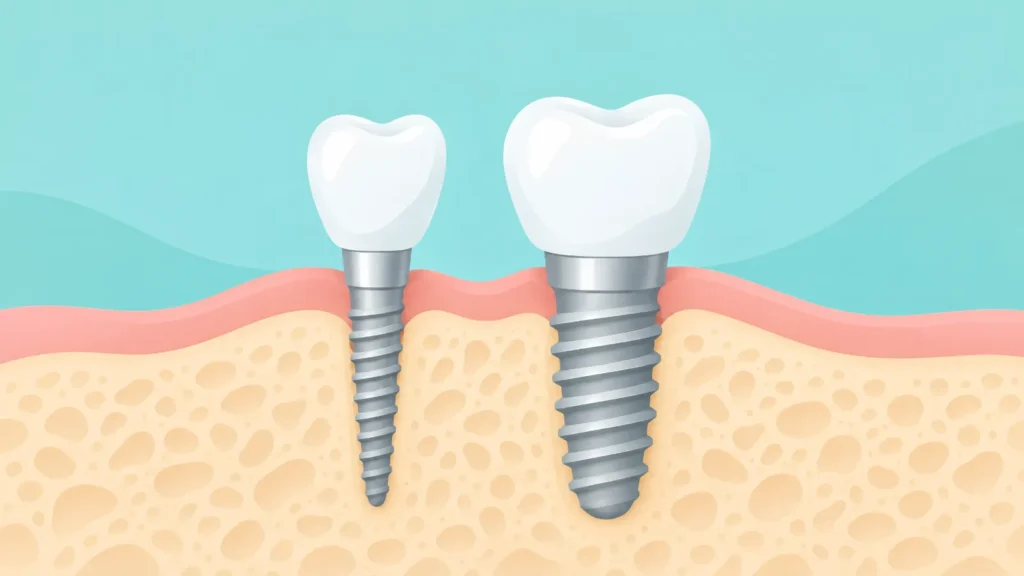
Every implant system follows the same basic layout. The FDA describes an implant body that takes the place of the tooth root and an abutment, usually attached by a small screw, that extends through the gums to support the new tooth.
| Term | Plain meaning | Source |
|---|---|---|
| Implant body (post or fixture) | The part placed in the jawbone where the root used to be | FDA |
| Abutment | The connector that extends through the gums and holds the artificial tooth | FDA |
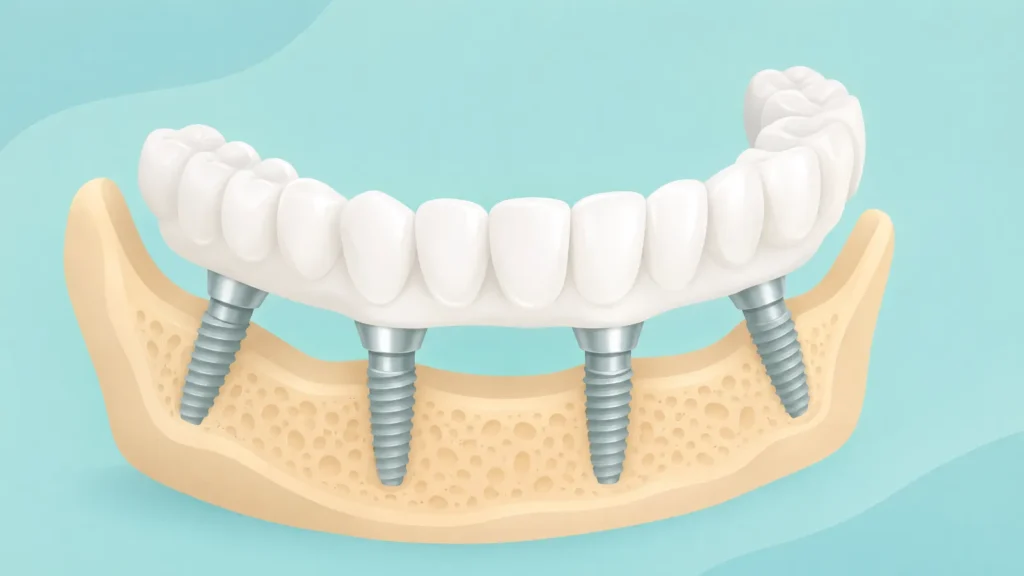
| Restoration | The crown, bridge or implant-supported denture on top | AAOMS |
| Osseointegration | The implant fusing with the surrounding bone over several months | AAOMS |
| Titanium | The metal named most often; AAOMS describes titanium alloy fusing with the jawbone | AAOMS, ADA |
| Zirconia (zirconium oxide) | A ceramic material the FDA names with titanium as the main implant materials | FDA |
| Endosteal implant | An implant set into the jawbone, the most common type | AAP |
The material question mostly concerns the implant body, because that is the part that has to bond with bone. The crown or denture on top is a separate restoration, and AAOMS says it goes on once the implant has fully bonded and the gum tissue has matured.
What does the FDA say about implant materials?
The FDA consumer page on dental implants is the most direct government source. It says most systems are made of titanium or zirconium oxide, and that other materials are sometimes used:
- Gold alloys
- Cobalt-based alloys
- Titanium alloys
- Ceramic materials
The FDA says implant materials typically follow ISO or ASTM consensus standards, that biocompatibility testing checks the device does not cause complications such as irritation or allergic reaction, and that makers must show a system is as safe and as effective as systems already on the U.S. market. Its device classification database lists root-form endosseous implants as Class II devices that go through 510(k) premarket notification.
The page does not rank the two materials, publish a head-to-head failure rate, or set a different healing time for ceramic. If a website gives exact survival percentages for zirconia versus titanium, ask where the numbers come from and whether the study patients resemble you.
The FDA has also looked at titanium in a broader way. A December 2022 literature review that ECRI prepared for the FDA found that titanium-containing implants showed good mid-to-long-term survival and few biological or inflammatory complications. It rated the evidence from its 10 dental systematic reviews as low to very low quality, and it noted that systemic responses were studied in only 14 of the 86 included studies, about 16 percent. In the dental studies it reviewed, titanium abutments showed more bleeding than zirconia abutments, also on low-quality evidence.
What do the dental associations say?
AAOMS says implants are made of titanium alloy that fuses with the jawbone through osseointegration, and that this bond is what makes implant restorations stable, unlike conventional removable dentures. ADA MouthHealthy says implants are made of titanium and other materials compatible with the human body. The AAP says endosteal implants, set into the jawbone, are the most common type.
None of these patient pages compares zirconia with titanium on success, allergy or appearance. So the choice rests more on your clinician’s experience with a specific brand and model than on any general rule.
Does the material change healing time?
None of the sources cited here sets a separate clock for zirconia. The general timeline from AAOMS, the AAP and ADA MouthHealthy applies to either material.
| Stage | Time named by the source | Source |
|---|---|---|
| Gum and soft tissue start to heal | First few days to weeks | AAOMS |
| New bone grows onto the implant | Several months; 2 to 6 months in full-mouth cases | AAOMS, AAP |
| Gums heal after the abutments go on | A couple of weeks (full-mouth cases) | AAP |
| Replacement teeth placed | Same visit for some patients; up to several months for others | ADA |
| Bone graft, if needed, heals first | Varies by procedure and patient | AAOMS |
What moves the calendar more is bone work and health. AAOMS says bone graft healing varies from procedure to procedure and patient to patient, and your surgeon gives the estimate for your mouth.
How long until the final tooth? (hypothetical dates)
Say a single implant goes in on March 1 with no graft, and the surgeon expects 4 months of bone fusion before the abutment step. That puts the abutment around July 1, and with about two weeks of gum healing, the crown around July 15. If the surgeon expected 6 months instead, the abutment would fall around September 1 and the crown around September 15.
Now say a graft comes first on January 1 and the surgeon expects 3 months before the implant. The implant would go in around April 1, the abutment around August 1 with a 4-month fusion estimate, and the crown around August 15. These months are placeholders for the math, not typical times, and lab work or scheduling can add weeks. Nothing in the sources suggests the post material changes this arithmetic.
Design can change the number of steps. The FDA describes the abutment as a separate part usually attached by a screw, so ask whether the system in your quote uses a separate abutment and how that affects the visits. Our first-time patient guide walks through each part.
Is a metal-free implant automatically the safer choice?
The sources do not say so. The FDA calls the safety profiles of both titanium and zirconium oxide well known, and its review process includes biocompatibility testing for irritation and allergic reaction. “Metal-free” describes the material. On its own, it does not show a safety advantage.
The FDA has an ongoing research effort on how the body responds to metals used in medical devices, which it describes as building a better understanding of the host response to implanted metal. That page does not mention dental implants or reach a conclusion about titanium in the mouth.
Most of the serious risks the FDA lists come from surgery and healing rather than from the post itself: damage to nearby teeth, sinus perforation, jaw fracture, nerve damage, and implant failure from infection or delayed healing. It says failure is usually defined as looseness or loss of the implant and may require another surgery. Those risks apply to either material.
If you have had reactions to metals before, tell your dentist and your physician. MouthHealthy notes a physician may evaluate you before implant surgery, and your clinicians decide whether a ceramic option makes sense for you. Either way, tell imaging staff you have implants: the FDA says implants can distort MRI or X-ray images, though it is not aware of adverse events reported for those scans.
What are the trade-offs between zirconia and titanium?
| Factor | Titanium | Zirconia (zirconium oxide) |
|---|---|---|
| Named by the sources | Most often; AAOMS and ADA describe implants as titanium | Named by the FDA with titanium as a main material |
| FDA safety statement | Safety profile well known | Safety profile well known |
| Metal content | Metal | Ceramic, no metal |
| Healing time in the sources | Several months (AAOMS) | No separate figure given |
| Head-to-head failure or allergy rates | Not published on the cited pages | Not published on the cited pages |
| Abutment comparison in the 2022 FDA-commissioned review | More bleeding than zirconia abutments (low-quality evidence) | Less bleeding than titanium abutments (low-quality evidence) |
Titanium’s advantage is that it is the material the sources describe when they explain a standard implant. Zirconia’s advantage is a ceramic option the FDA recognizes, which some patients prefer. Its main limitation in the sources is how little detail they give, so ask how many of that brand and model your dentist has placed and how they follow those patients.
When health is the weak link, waiting or choosing another option can matter more than the material. The AAP describes the ideal candidate as having good general and oral health, enough jawbone and gums free of periodontal disease. MouthHealthy says chronic illnesses such as diabetes may interfere with healing and tobacco can slow it, and the FDA says smoking may lower long-term success. Switching materials does not change any of that. Our guide to implant candidacy and red flags covers these limits.
Upkeep is the same for both. The AAP says implants need regular brushing, flossing and dental check-ups, and that inflammation reaching the bone around an implant usually requires surgical treatment. AAOMS says implants can last a lifetime if properly cared for, and our guide to implant and crown lifespan covers the crown or denture on top.
How are zirconia and titanium implants sold to patients?
In 18 years of finance and insurance performance marketing, I have watched single words like “metal-free” or “biocompatible” carry an ad that should be carried by a treatment plan. The FDA makes biocompatibility testing part of its evaluation of implant systems generally, so the word alone does not set one material apart.
Price ads can also quote one part of the system. Ask whether the figure includes the implant body, the abutment, the crown or denture, any bone graft and follow-up visits. Our dental implant cost breakdown shows how to compare plans line by line.
Financing rules apply to both materials. The CFPB warns that medical credit cards often defer interest, that interest accrues on the full amount charged if the balance is not paid by the end of the promotion, and that skipping a second opinion can lead to more expensive treatment than you need.
Questions to ask your dentist or oral surgeon
Start with a full exam. Bone, gums and general health decide candidacy before material does. Then ask:
- Which material do you recommend for my mouth, and why?
- How many of this brand and model have you placed, and how do you follow those patients?
- Can I have the brand and model in writing? The FDA recommends keeping that record for future repairs.
- Is the abutment a separate part, and how does that change the visits and the crown or denture?
- Do gum disease, diabetes or smoking need attention first? The AAP, ADA and FDA all name them.
- I have reacted to metals before. Should my physician weigh in?
If a narrow implant is also on the table, read our mini vs traditional implant guide before you compare plans line by line.
Frequently asked questions
Are zirconia implants better than titanium implants?
The FDA does not name one as better. It lists titanium and zirconium oxide as the main implant materials and calls their safety profiles well known. Your dentist or oral surgeon matches the material and design to your bone and health history.
Do zirconia implants heal faster than titanium implants?
None of the sources cited here sets a different healing time for zirconia. AAOMS says bone attaches to an implant over several months, and grafting and health factors change the calendar more than the material label does.
Can I be allergic to a titanium implant?
The FDA says biocompatibility testing for irritation and allergic reaction is part of its evaluation, and a 2022 review prepared for the FDA found few biological or inflammatory complications with titanium implants, though it flagged evidence gaps. Tell your dentist and physician about any past reactions to metals.
Will a zirconia or titanium implant interfere with an MRI or X-ray?
The FDA says dental implants can distort or interfere with MRI and X-ray images, so tell imaging staff before a scan. It says it is not aware of adverse events reported for those scans with dental implants.
Does Medicare cover zirconia or titanium implants?
Generally no. Medicare.gov says Medicare does not cover items like dentures and implants, with narrow exceptions for dental care tied to certain covered medical treatment. Check any dental or Medicare Advantage plan in writing.

Review status: Not yet reviewed by a dentist. This guide is general information, not medical advice.
Sources
- FDA: Dental Implants: What You Should Know
- FDA: Product Classification, implant, endosseous, root-form (21 CFR 872.3640)
- FDA: Metals Used in Medical Devices
- FDA (prepared by ECRI): Medical Device Material Performance Study, Titanium Safety Profile (December 2022)
- AAOMS (professional association): Dental Implant Surgery
- AAOMS (professional association): Healing Process for Dental Implants
- AAOMS (professional association): Bone Grafts
- American Dental Association, MouthHealthy (professional association): Implants
- American Academy of Periodontology (professional association): Dental Implant Procedures
- American Academy of Periodontology (professional association): Full Mouth Dental Implants
- American Academy of Periodontology (professional association): Peri-Implant Diseases
- Medicare.gov: Dental services
- CFPB: What should I know about medical credit cards and payment plans for medical bills?
- IRS: Publication 502, Medical and Dental Expenses (2025 returns)
- IRS: Publication 969, Health Savings Accounts and Other Tax-Favored Health Plans (2025 returns)