A full-arch implant restoration replaces every tooth in your upper or lower jaw with one connected bridge or denture held in place by implants. All-on-4 is a trademarked name for one four-implant version. AAOMS (updated September 2026) says two or more implants can anchor the teeth, and the AAP says the implants and bone bond over 2 to 6 months.
The All-on-4 name appears here because it is what most people type into a search bar, not because this guide favors any branded technique. How many implants you need, and whether the teeth are fixed or removable, is for your oral surgeon or dentist to decide from your exam, imaging and health history.
What does a full-arch implant restoration include?
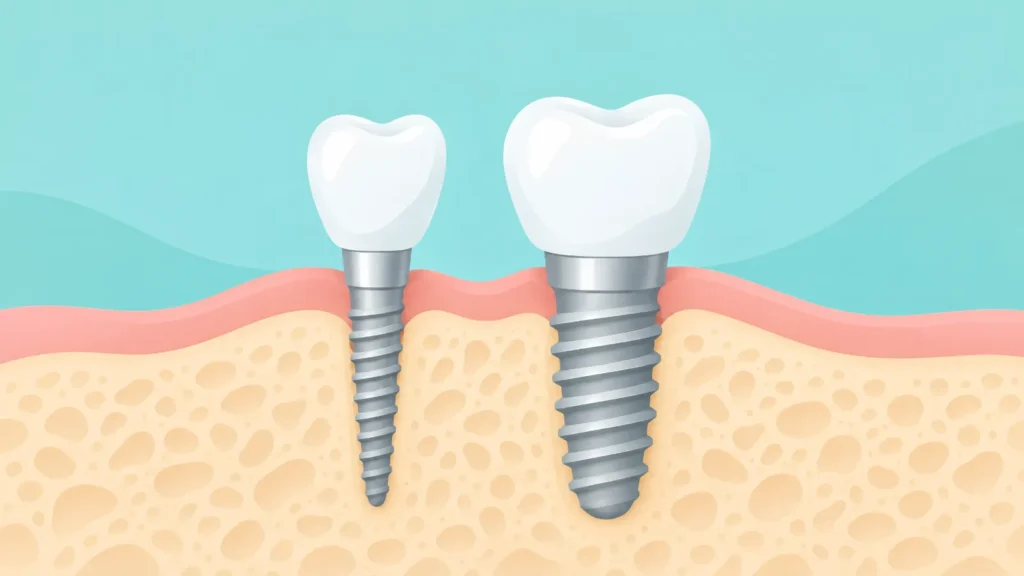
The FDA describes each implant as an implant body placed in the jawbone where a root used to be, plus an abutment that extends through the gums to hold the teeth. A full arch puts several implants under one connected set of teeth. AAOMS says the surgeon determines the number of implants needed to support the denture.
| Term | Plain meaning | Source |
|---|---|---|
| Implant body | The post placed in the jawbone where a root used to be | FDA |
| Abutment | The connector that extends through the gums and holds the teeth | FDA |
| Full arch | All upper or all lower teeth, replaced by a full bridge or denture on implants | AAP |
| Removable implant-retained denture | A denture the patient can snap off the implants as needed | AAOMS |
| Fixed full-arch restoration | A non-removable arch that only a dentist can take off | AAOMS |
| Temporary teeth or healing caps | Worn over the implant sites while the bone heals | AAP |
| Osseointegration | The jawbone fusing with the implant over several months | AAOMS |
| All-on-4 | A trademarked name for one fixed, four-implant design | Not defined on the sources cited here |
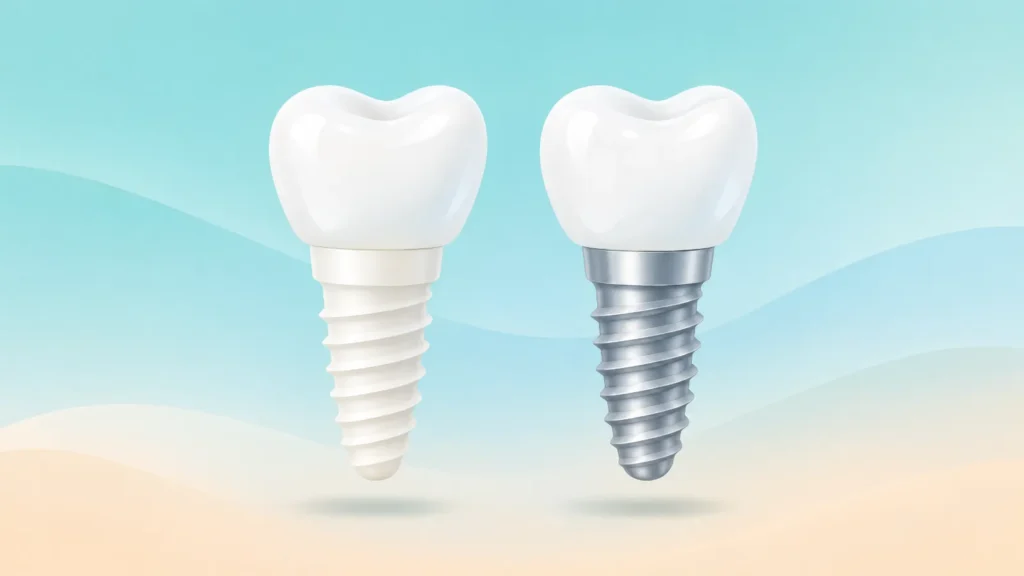
Most implant systems are titanium or zirconium oxide, according to the FDA, which also suggests asking for the brand and model of your system and keeping that record.
What are the full-arch options?
| Option | Who removes it | Effect on bone | Daily care |
|---|---|---|---|
| Conventional complete denture | You, daily | The bone that held the roots begins to deteriorate (AAP) | Remove and clean after eating, soak overnight (AAP) |
| Removable implant-retained denture | You, as needed (AAOMS) | Implants fuse with bone, which AAOMS says reduces the risk of bone loss | Clean the denture and the implant sites; ask your dentist for the routine |
| Fixed full arch on implants, including four-implant designs | Only a dentist (AAOMS) | Implants replace some roots, so bone is better preserved (AAP) | Daily brushing and flossing (AAP) |
The AAP lists the advantages of full-mouth implants over conventional dentures: they look and function more like natural teeth, are designed to be long lasting, feel more comfortable and stable, allow more natural biting and chewing, and do not need to be removed after meals or soaked overnight. AAOMS adds that dentures wear out over time and need to be replaced.
Choosing between a fixed and a removable arch comes down mostly to cleaning and preference. A removable denture comes out for cleaning. A fixed arch stays in and is cleaned in place. Our side-by-side look at implants and dentures goes further into that choice.
How does the process work, and how long does it take?
No source cited here publishes one official full-arch calendar, and each stage can run longer or shorter depending on your bone and healing. The AAP and AAOMS describe this broad sequence:
| Stage | What happens | Timing named by the source |
|---|---|---|
| Exam and planning | Review of general and oral health, gums and jawbone | Before surgery; a physician may evaluate you first (ADA) |
| Extractions | Remaining damaged teeth are removed | Not timed by the sources cited |
| Bone graft, if needed | Bone or a substitute rebuilds the ridge | Varies by procedure and patient (AAOMS); 4 to 12 months after a sinus augmentation (AAP) |
| Implant placement | Gum is opened and each implant is placed, with temporary teeth or healing caps | Repeated for each implant (AAP) |
| Suture removal | Stitches come out | 7 to 10 days (AAP) |
| Integration | Bone bonds to the implants | 2 to 6 months (AAP) |
| Abutments | Implants are uncovered and abutments attached | About a couple of weeks of gum healing (AAP) |
| Final arch | The full bridge or denture is attached | After the implants bond and the gums mature (AAP, AAOMS) |
Before surgery, ADA MouthHealthy says you may be medically evaluated by a physician, and that your health is more of a factor than your age. It also notes that some patients get implants and replacement teeth in one visit, while others wait up to several months for full integration.
For the first weeks, AAOMS says some discomfort, swelling and bruising is normal, a soft diet is usually recommended early on, and you may be asked to avoid strenuous exercise. The FDA says to tell your dental provider right away if an implant feels loose or painful. Our recovery timeline covers the early weeks in more detail.
Say, with made-up figures, a surgeon expects a graft to need 4 months before the implants go in. Adding the AAP’s 2 to 6 months of bonding gives 4 + 2 = 6 months at the short end and 4 + 6 = 10 months at the long end, plus a couple of weeks of gum healing and the time to make the final arch. With a 6-month graft, the same math gives 8 to 12 months. Your surgeon’s estimates replace these numbers.
What do full-arch ads tend to leave out?
- “Teeth in a day” usually means the first set. ADA MouthHealthy says some patients get teeth in one visit, but the bone still needs months to fuse before the final arch, and the AAP describes temporary teeth during that time.
- Grafting may still be part of the plan. The AAP calls the quantity and quality of bone a key to implant success and lists ridge modification and sinus augmentation among implant procedures. AAOMS says graft healing varies by procedure and patient.
- A success-rate headline is not your odds. None of the sources cited here publishes a success rate for a four-implant design. Ask where any percentage comes from and whether the patients in that study resemble you.
- Lifetime claims apply to the implants. AAOMS says implants can last a lifetime if properly cared for. Ask how long the arch on top is expected to last and what replacing it involves.
- Fixed still means daily cleaning. The AAP says full-mouth implants are cared for with daily brushing and flossing, and its peri-implant disease page says inflammation that reaches the bone usually requires surgical treatment.
- The price is not 32 implants. AAOMS says full-mouth cost is not the cost of 32 individual implants, that cost varies by patient, that custom abutments and crowns add to the total, and that some insurance policies give partial coverage.
- Medicare rarely helps. Medicare.gov says Medicare generally does not cover items like dentures and implants, with narrow exceptions tied to certain covered medical treatment.
What goes into a full-arch quote?
None of the sources cited here gives a dollar figure for a full arch, and AAOMS says the cost varies by patient. So instead of prices, this table lists the pieces a written quote should name.
| Line item | What it covers | Source |
|---|---|---|
| Extractions | Removing remaining damaged teeth | AAP |
| Bone graft or sinus augmentation | Rebuilding thin bone; not every plan needs it | AAP, AAOMS |
| Implants | The number your surgeon decides on | AAOMS |
| Abutments and custom parts | Custom abutments and crowns add to the total | AAOMS |
| Temporary teeth | Worn while the bone heals | AAP |
| Final arch | The full bridge or denture attached at the end | AAP |
| Future arch replacement | Implants can last a lifetime with care; ask how long the arch lasts | AAOMS |
Our guide to reading an implant quote shows how a full-arch plan is itemized and why it is not priced as one implant times the number of teeth.
What are the risks, and when is waiting the better choice?
The FDA lists risks that apply to any implant: damage to nearby teeth, sinus perforation or jaw fracture during surgery, a bite that does not feel right, abutment screw loosening, implant failure from infection or delayed healing, and numbness from nerve damage. It says failure is usually defined as looseness or loss of the implant and may require another surgery. A full arch spreads those risks across several implant sites.
Waiting, or another option, can make sense in situations the AAP, ADA and FDA describe:
- Gum disease that has not been treated, since the AAP describes the ideal candidate as having gums free of periodontal disease.
- Too little jawbone without a plan to rebuild it, since the AAP lists adequate bone as part of the ideal profile.
- A chronic illness such as diabetes or leukemia, which ADA MouthHealthy says may interfere with healing.
- Smoking, which the FDA says may affect healing and long-term success.
- A schedule or budget that cannot absorb several months of staged treatment right now.
Your dentist or oral surgeon weighs these against your exam. Our guide to who may not be a good candidate for implants covers them in more depth.
Does a four-implant design skip bone grafts or last a lifetime?
Some ads suggest a four-implant layout removes the need for grafting. None of the sources cited here makes that promise. The AAP ties implant success to bone quantity and quality, and it notes that the upper back jaw often has limited bone because the sinus sits close by, which sinus augmentation can address before implants go in.
The lifetime claim needs limits too. AAOMS says implants can last a lifetime if properly cared for and that there is no shortcut for bone fusion, which usually takes several months. The FDA says a failed implant may need another surgery.
How are full-arch offers sold?
In 18 years of finance and insurance performance marketing, I have seen full-arch offers lead with a same-day smile photo and a monthly payment while the healing months and the graft question sit in the fine print. Making the consultation and the financing decision on two separate days gives you room to read the plan.
The CFPB says a doctor or staff member generally signs you up for a medical credit card, that interest is often deferred, and that if the balance is not paid by the end of the promotion, interest accrues on the full amount charged. It adds that skipping a second opinion can lead to more expensive treatment than you need.
Say a made-up $20,000 full-arch plan goes on a 12-month deferred-interest card and you pay $1,500 a month.
| Example item (made-up figures) | Amount |
|---|---|
| Plan charged to the card | $20,000 |
| Paid after 12 payments of $1,500 | $18,000 |
| Still owed when the promotion ends | $2,000 |
| Monthly payment that would have cleared it ($20,000 / 12) | About $1,666.67 |
| Deferred interest added at 26.99 percent | Roughly $3,171 |
The CFPB says deferred interest is usually figured on each month’s balance since the purchase. Those balances run from $20,000 down to $3,500 and add up to $141,000, so at the 26.99 percent medical card rate cited in a 2023 CFPB report, the charge would be about $141,000 times 0.2699 divided by 12, or roughly $3,171, on top of the $2,000.
Questions to ask your dentist or oral surgeon
Get the answers in writing where you can, and take the plan home before you decide.
- Do my bone and health support a full arch? How many implants do you plan, and why that number?
- Fixed or removable: which fits my mouth, and how is each one cleaned?
- Do I need gum treatment, better diabetes control or time off smoking before surgery?
- Will I need a bone graft or sinus augmentation, and how long will I wear temporary teeth?
- When do you expect to attach the final arch, and how long should it last?
- Which implant brand and model will you use? The FDA suggests keeping that record.
- Does the quote include extractions, grafts, temporary teeth, the final arch and its eventual replacement?
- Can I take the financing terms home? Our financing guide compares the options.
For a plan this size, a second opinion before you sign is money well spent.
Frequently asked questions
How long does full-arch implant treatment take?
The AAP describes 2 to 6 months for the implants and bone to bond, then a couple of weeks of gum healing after the abutments go on. A bone graft adds its own healing time first, which AAOMS says varies by procedure and patient. Your surgeon gives the estimate for your mouth.
Can I take a fixed full arch out at night?
No. AAOMS says a fixed implant-retained arch can only be removed by a dentist, and the AAP says full-mouth implants are cleaned with daily brushing and flossing. If you want to remove your teeth yourself, ask about a removable implant-retained denture.
Does Medicare cover full-arch implants?
Generally no. Medicare.gov says Medicare does not cover items like dentures and implants, with narrow exceptions for dental care tied to certain covered medical treatment. AAOMS notes some insurance policies give partial coverage, so ask your plan in writing.
Can I get a full arch if I smoke or have diabetes?
Possibly, but both matter. The FDA says smoking may affect healing and long-term success and that infection-related failure may be more likely with uncontrolled diabetes. ADA MouthHealthy says diabetes may interfere with healing. Talk with your dentist and physician first.
Are four implants enough, or should I ask for more?
The sources cited here do not set a standard count. AAOMS says two or more implants can anchor full-mouth teeth and that the surgeon determines the number needed. Ask your surgeon why they chose the number in your plan.

Review status: Not yet reviewed by a dentist. This guide is general information, not medical advice.
Sources
- American Academy of Periodontology (professional association): Full Mouth Dental Implants
- American Academy of Periodontology (professional association): Dental Implant Procedures
- American Academy of Periodontology (professional association): Sinus Augmentation
- American Academy of Periodontology (professional association): Peri-Implant Diseases
- AAOMS (professional association): Full-mouth Restoration with Dental Implants
- AAOMS (professional association): Advantages of Implant-retained Dentures
- AAOMS (professional association): Healing Process for Dental Implants
- AAOMS (professional association): Bone Grafts
- AAOMS (professional association): Dental Implant Surgery
- American Dental Association, MouthHealthy (professional association): Implants
- FDA: Dental Implants: What You Should Know
- Medicare.gov: Dental services
- CFPB: What should I know about medical credit cards and payment plans for medical bills?
- CFPB: What is a deferred interest promotion?
- CFPB: Report highlights costly credit cards and loans pushed on patients (May 2023)
- IRS: Publication 502, Medical and Dental Expenses (2025 returns)
- IRS: Publication 969, Health Savings Accounts and Other Tax-Favored Health Plans (2025 returns)